A text-to-mind-map workflow turns typed or pasted material into visible branches. In Cruxl, the text becomes source material for an editable map rather than a finished diagram or a replacement for the user's understanding.
The strongest input is not polished prose. Rough notes, a problem description, an assignment prompt, a meeting recap, or a collection of related ideas can all provide enough material for a useful first structure.
What kind of text can become a useful map
- Class or reading notes that contain several themes and questions.
- A rough explanation with competing ideas, constraints, or possible directions.
- An essay prompt plus claims, evidence, and unresolved gaps.
- A collection of observations that needs grouping before a decision.
- A story inventory made from moments, choices, details, and reflection.
From pasted text to map
- Paste or type the material into the authenticated composer.
- Clarify what the map should help reveal or decide.
- Create the first map from the composer brief and any selected context.
- Check labels and connections against the original material.
- Move, rename, delete, or grow branches instead of accepting the first arrangement unchanged.
The value is the visible structure, not decorative formatting
The map should reveal grouping, hierarchy, tension, evidence, questions, or possible next branches. Color and shape can support meaning, but they cannot repair vague labels or unsupported relationships.
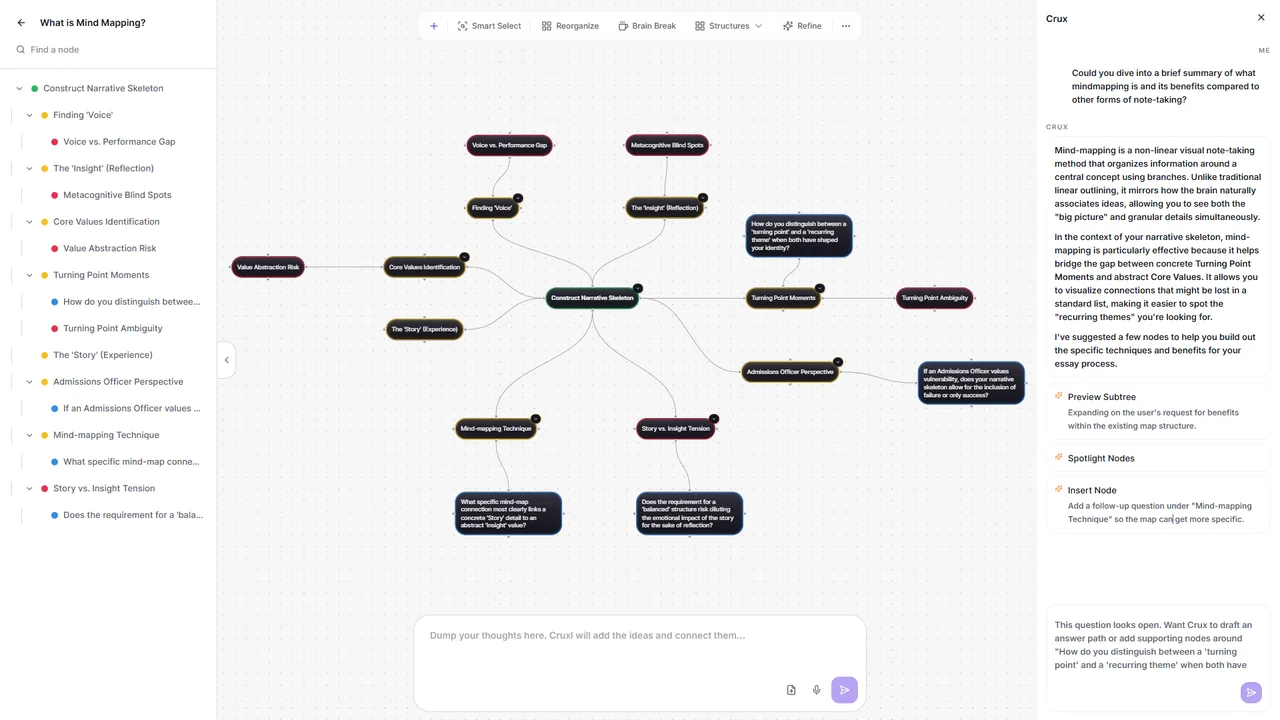
Check the first map against the text
- 01Which important idea disappeared or became too vague?
- 02Which connection was inferred but not actually supported?
- 03Which repeated points belong together?
- 04Which branch contains a question rather than an answer?
- 05What change would make the map easier to explain to someone else?
Start with the text you already have.
Paste a rough note, explanation, prompt, or collection of ideas into the Cruxl composer, then revise the resulting map until the structure reflects the material.
Turn text into a map